

Invisible Speakers: In-Wall vs. In-Ceiling Speakers for a NYC Apartment
In-wall speakers sound better for a TV and for music you sit and listen to. They face you, so the sound is clear and the stereo image is strong. In-ceiling speakers are better for background music in kitchens, halls, and open rooms. They spread sound evenly and almost disappear. Most NYC apartments use both: in-wall speakers at the TV and ceiling speakers everywhere else.
⚡ QUICK SUMMARY
In-wall speakers: best for the TV wall and real listening. Clear voices, strong stereo. In-ceiling speakers: best for background music and open rooms. Even sound, low visual impact. Cost: ceiling speaker installation runs $1,000 to $2,000 per project (national average, Angi 2026). NYC runs higher. NYC catch: concrete ceilings and plaster walls change where speakers can go. Cutting in almost always means holes, and we do not patch or paint.
You want music in every room. You do not want boxes on shelves or a soundbar under every TV. Invisible speakers solve that. They sit flush in the wall or ceiling behind a thin grille you can paint to match. The big question is where they go. Here is how in-wall and in-ceiling speakers compare, what they cost, and what New York buildings allow.
Home Theater Advisors has installed sound systems in New York City homes since 2011, with over 500 installs. Every audio and video system we put in is wire-free on the outside. So hidden speakers are a big part of what we do, in pre-war, post-war, and new buildings.
In Wall vs In Ceiling Speakers: What Is the Real Difference?
The difference is direction. In-wall speakers fire sound straight at you, like a speaker on a stand. In-ceiling speakers fire sound down, from above. That one fact decides most of the choice.
For a TV, the left, center, and right speakers should face you. That is why in-wall speakers win at the TV wall. For music while you cook or host, you want even sound everywhere. That is where ceiling speakers win.
When Ceiling Speakers Are the Better Choice
Pick ceiling speakers when the music is in the background. Kitchens, dining rooms, halls, and bathrooms are the classic spots. The sound comes from above, so it covers the room evenly. Guests do not notice a speaker. They just notice the music. For aesthetics, nothing beats it.
Good spots for in ceiling speakers
Open kitchen and dining room - A pair of ceiling speakers spread over the space gives even sound with no box on the counter.
Long halls and entries - Small ceiling speakers carry music from room to room so the whole home feels connected.
Bathrooms - Moisture-rated ceiling speakers are made for steam. Check the rating before you buy.
Media room surrounds - Ceiling speakers can act as surround or overhead speakers for a home theater when wall space is short.
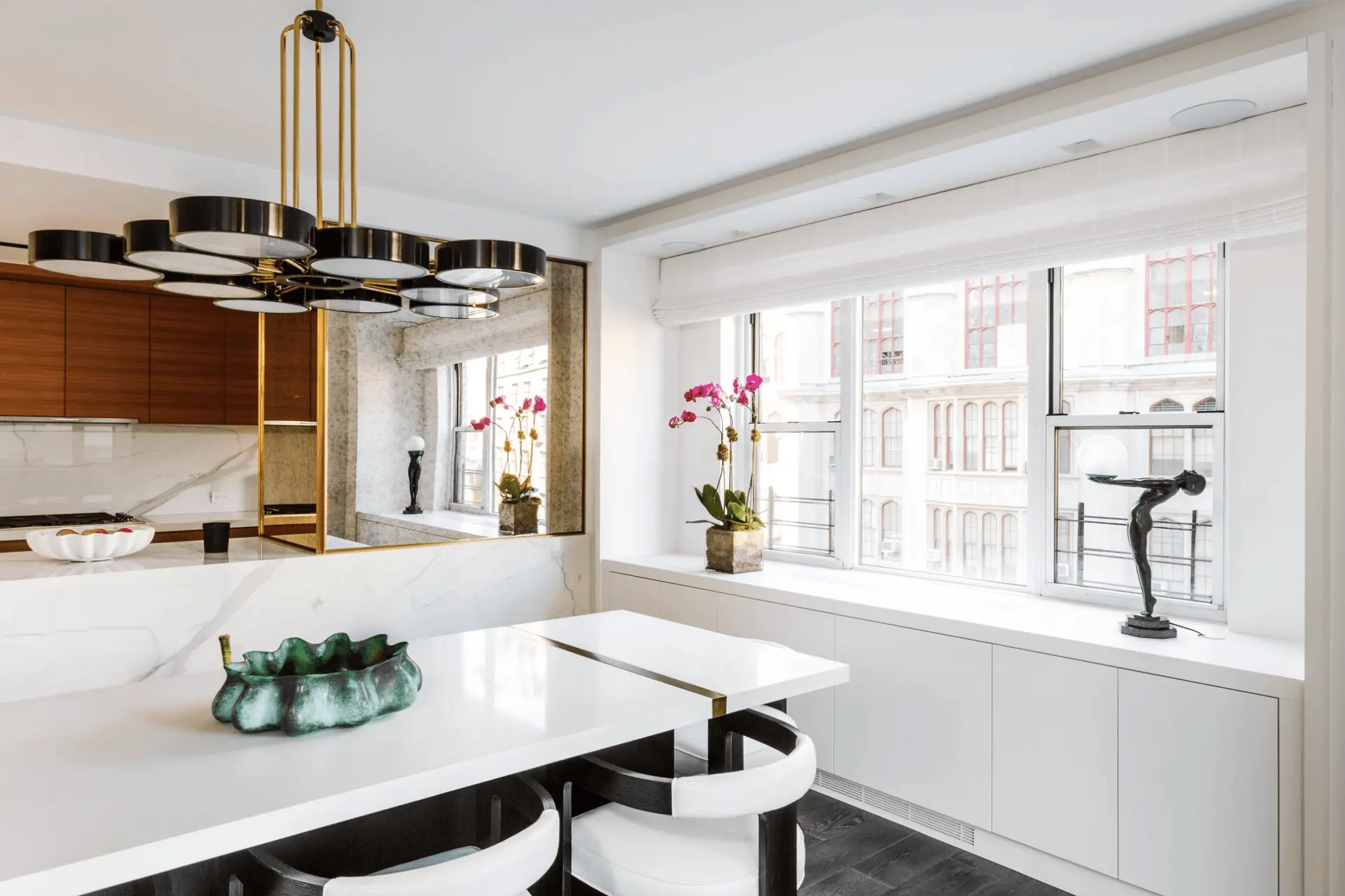
In-ceiling speakers with paintable grilles in a Manhattan apartment.
When In-Wall Speakers Are the Better Choice
Pick in-wall speakers when you sit and listen. Movies, sports, and serious music need sound that comes from the front. In-wall speakers have bigger boxes and bigger drivers, so they make more bass and clearer voices. On a TV wall, a left, center, and right set of in-wall speakers beats any soundbar for clear dialogue.
💡 Pro Tip: Aim the Tweeter
Many in-wall speakers have a tweeter you can aim. If the speaker sits high or off to the side, the installer turns the tweeter toward your seat. It is a small step that makes voices sound much clearer.
How Do Invisible Speakers Fit NYC Walls and Ceilings?
This is the part national guides skip. New York apartments have no attics and no basements. Wire cannot drop in from above or come up from below. Each building type is a different job.
Pre-war plaster and lath Plaster walls often have a hollow cavity, so we might be able to fish speaker wire. Metal lath and old plaster crack if you cut wrong. Expect holes. | Post-war concrete Many towers have concrete ceilings and walls. Ceiling speakers need a drop ceiling or soffit to sit in. No cavity means no speaker. |
Modern buildings Metal studs and drywall are the easiest. Glass walls, marble, and stone are not options. Thin walls can mean neighbor noise. | Co-op and condo rules Many boards limit work hours and want proof of insurance. Some want approval for any cut into a shared wall or ceiling. |
⚠️ Plan for a Painter
Cutting in speakers almost always means holes in the wall or ceiling along the wire path. We make the holes neat, but we do not patch or paint. Line up your painter before the install.
Not sure if your ceiling can take speakers? We will look and tell you, free.
Book a Free ConsultationWhat Do In-Ceiling and In-Wall Speakers Cost?
These are national averages. New York City labor, building rules, and plaster or concrete walls push costs higher. We charge MSRP on equipment, and you get an itemized proposal before any work starts. For a full price breakdown, see our whole-home audio cost guide.
Does a Speaker in the Wall or Ceiling Sound as Good as a Box Speaker?
A good in-wall speaker can sound as good as a bookshelf speaker. The wall cavity acts as the box. That is also the weak spot. A loose cavity can rattle, and sound can leak into the next room. A back box fixes both. It is a sealed shell behind the speaker. In a NYC apartment with neighbors on the other side of the wall, a back box is worth it.
What makes hidden speakers sound good
Placement - Front speakers at ear level when seated. Ceiling speakers spaced evenly, not crammed in a corner.
Back boxes - Sealed boxes give tighter bass and keep sound out of the neighbor's apartment.
Real power - A proper amp, like a Sonos Amp or a multi-zone amp, drives the speakers cleanly.
A subwoofer for the TV - Ceiling speakers make little bass. A hidden or in-wall sub fills it in for movies.
How Ceiling Speakers Get Installed, Step by Step
1Plan the spots
We mark speaker spots on a plan, check the ceiling or wall type, and find joists, pipes, and sprinkler lines.
2Cut the openings
Each speaker gets a round or square cutout sized to the speaker. A template keeps it clean.
3Run speaker wire
In-wall rated speaker wire runs from each speaker to the amp. This step usually means a few access holes along the path.
4Mount and connect
The speaker clamps into the opening. Wires connect at the amp, often in a closet or media cabinet.
5Paint grilles and tune
Grilles can be painted to match. We set levels so every room sounds even, and you control it all from one app or remote.
“I spent years watching great products get installed badly. The equipment matters - but the installer matters more.”
- Mark Feinberg, Founder of Home Theater Advisors
Questions About In-Wall and In-Ceiling Speakers
Do in-wall speakers need a box?
Not always, but a back box helps. It tightens the bass, stops rattles, and keeps sound from leaking to the neighbors. In shared NYC walls, we suggest it.
Do wall mounted speakers sound better than ceiling speakers?
For a TV and focused listening, yes. Wall speakers face you, so voices are clearer. For background music, ceiling speakers spread sound better.
Can you put ceiling speakers in a concrete ceiling?
Not into the concrete itself. You need a drop ceiling, a soffit, or a bulkhead to hold them. If there is none, in-wall or on-wall speakers are the answer.
Can ceiling speakers be used for a home theater?
Yes, as surround or overhead speakers. For the front left, center, and right, wall speakers or a soundbar are better.
How many ceiling speakers does a room need?
Most rooms need a pair. Long or open rooms may need four. A single speaker only works in a small bath or closet.
Are invisible speakers really invisible?
Close. Paintable grilles blend into the ceiling or wall. Some brands make fully hidden speakers that go behind a thin skim coat, but those are a bigger job.
Ready for music in every room with nothing on the shelves? Read how we plan the wires to run before the walls close, see how a Control4 system runs it all, or book a free consultation.
About the Author
Mark Feinberg, Founder & CEO of Home Theater Advisors. Before founding HTA in 2011, Mark ran Product Management at ADI, one of the largest AV distributors in the country. He is a Certified Control4 Smart Home Dealer and CEDIA member, and HTA has earned multiple Houzz Best of Design Awards. Mark holds a BA from Dartmouth and an MBA from Duke's Fuqua School of Business. He lives in Manhattan with his family.
Hear the Music. Never See the Speakers.
In-wall and in-ceiling speakers for pre-war, post-war, and new NYC homes. Free consultation, itemized proposal.
| Call (646) 450-1060 → | Book a Free Consultation |
